 About
Activities
Projects
medias
About
Activities
Projects
medias

 fr
fr
As part of its cultural outreach activities and its mission to disseminate opera-based research-creation, the Canada Research Chair in Opera Creation is organizing, during Winter 2025, a public workshop in dialogue with Ana Sokolović’s opera Clown(s). Designed as a continuation of the interdisciplinary work conducted on the figure of the clown in opera, this workshop seeks to introduce audiences of all ages to expressive practices that blend music, movement, and vocal experimentation.
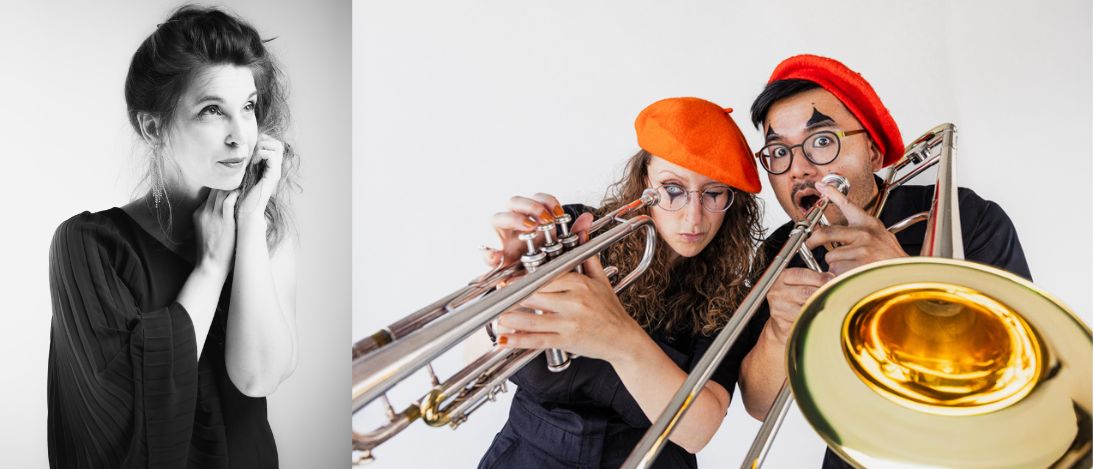
Led by Duo ék (Émilie Fortin and Kalun Leung) together with Hélène Picard, the workshop offers a one-hour immersion into the distinctive aesthetic world of Clown(s). Beginning with a listening exploration of the three instruments that structure the opera the trumpet, the trombone, and the voice the audience is invited to explore foundational elements of operatic art, as well as key aspects of the composer’s creative process. This approach presents opera not only as a musical form but also as a space for play, embodiment, and imagination.
Participants are then guided through the re-creation of two scenes from the opera, working with two essential components of Ana Sokolović’s artistic language: vocal work, rooted in an expressivity that combines phonemes, breath, and musicality; sound mime, a hybrid technique in which gestures and sounds intertwine to generate a narrative, emotional, and sensory universe.
These explorations are interspersed with guided discussions, encouraging both audiences and facilitators to reflect collectively on the central themes of the opera: self-discovery, vulnerability, and the transformations that shape the characters’ journeys. In this sense, the workshop adopts a pedagogical approach in which artistic reception also becomes a reflective experience.
The first workshop sessions will take place:
Additional school, cultural, and healthcare institutions will host the activity throughout the winter, thereby extending the reach of this pedagogical initiative.
Through this program, the Chair continues to foster spaces of encounter between contemporary creation, interdisciplinary research, and young audiences, highlighting the role of opera as a field of aesthetic, educational, and social exploration.